
The Brown Box-Cyanotype kit I Sun-Printing kit I Print on Paper & Fabric.
Cyanotype, a 19th-century technique, creates blue & white images using a UV-sensitive solution and sunlight. This process is now a popular artistic medium for photographers and crafters. Place objects or negatives on coated paper/ fabric and exposing them to sunlight, stunning cyan blue prints emerge. Simple, eco-friendly, and versatile. Cyanotype is a timeless method for capturing nature, textures, and creative designs.
SCIENCE MEETS MAGIC!:
Sun prints use light-sensitive cyanotype chemicals, a process discovered by Sir John Herschel in the 1800s. When objects block sunlight, they leave behind a silhouette—just like magic! Now, kids can try it themselves and experience the wonders of science
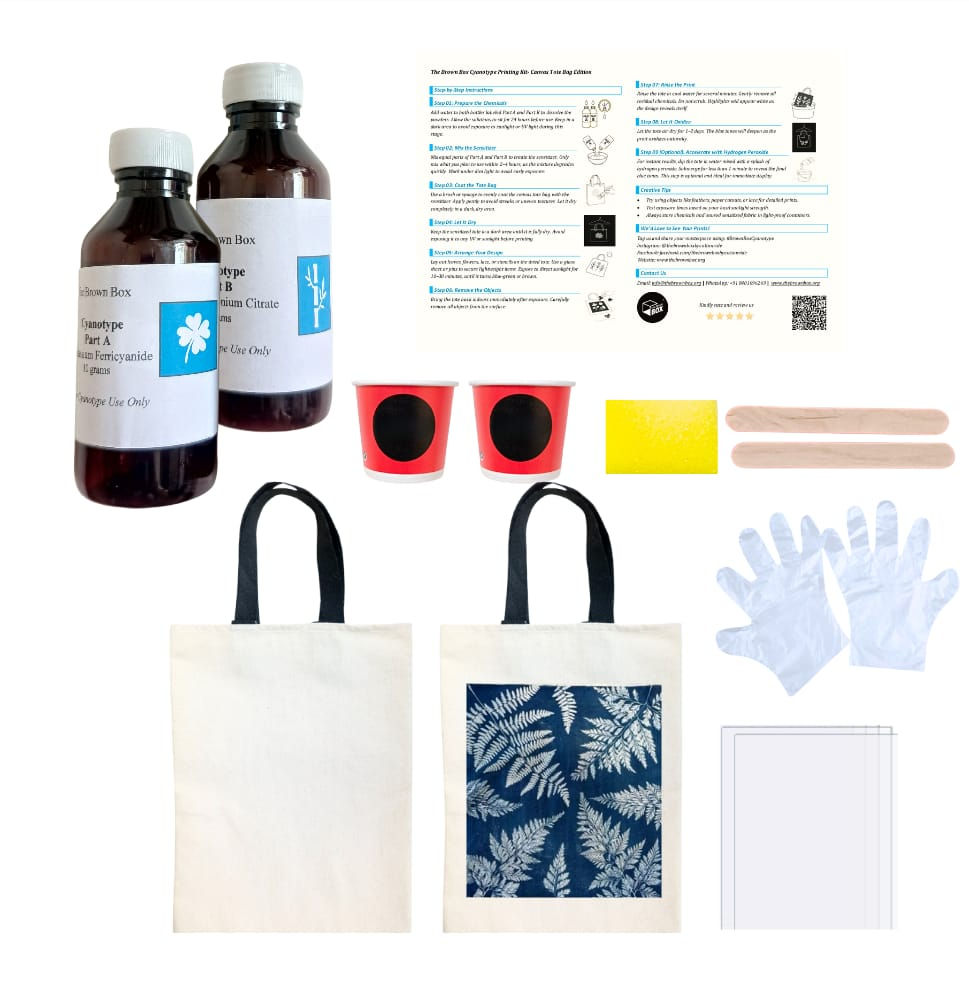
🌞 Complete Cyanotype Kit for Beginners – Includes pre-measured 2 bottles of chemicals (Part A: Potassium Ferricyanide & Part B: Ferric Ammonium Citrate), mixing cups, popsicle sticks, gloves, sponge, and more—perfect for artists, hobbyists, students, and curious crafters.
🖼️ Create Stunning Sun Prints at Home – Make beautiful blue-and-white cyanotype prints using sunlight! Works great on paper, fabric, and the included eco-friendly Khadi tote bag.
🎨 All-In-One DIY Art Set – Comes with transparency sheets to create custom designs, a sponge for smooth application, and full instructions—no extra supplies needed.
🧤 Safe & Mess-Free Crafting – Includes protective gloves, easy mixing tools, and a clear guide for a clean and hassle-free experience every time.
🎁 Perfect Gift for Creative Souls – Comes in stylish, sturdy packaging—ideal for birthdays, art workshops, holidays, or a relaxing screen-free creative session.
📹 Step-by-Step Instruction Manual Included – A detailed printed guide walks you through the entire cyanotype printing process—great for beginners of all ages.
🧠 Develops Creativity – A rewarding art activity that fosters imagination and artistic expression. Spark creativity with this science-powered craft that blends art and chemistry.
🔬 Inspires STEM Learning – Discover the magic of photochemistry, light exposure, and negative imaging! This hands-on kit introduces key STEAM concepts through creativity, allowing kids to explore science and art in an exciting way.
Troubleshooting Guide: Cyanotype Printing
Achieving a crisp, sharp cyanotype on canvas is a bit more challenging than on paper because the fabric weave is porous and can "wick" the solution, leading to those blurry edges.
To ensure your next tote looks professional, here is a step-by-step troubleshooting guide to get those sharp lines:
1. Fabric Preparation (The "Pre-Wash")
New tote bags often have "sizing" (a starchy coating) that prevents the sensitiser from soaking in evenly.
-
Action: Wash the tote in plain water (no detergent or fabric softener) and let it dry completely before sensitising.
-
Why: This ensures the chemical bonds directly to the cotton fibres, preventing the "faded" look.
2. Controlled Sensitising
The "bleed" in your photo usually happens because there is too much liquid in the fabric.
-
Action: Use a foam brush or a hake brush. Apply a thin, even layer only where you want the print.
-
The "Paper Towel Trick": After coating, lightly blot the area with a clean paper towel to remove any excess puddles.
-
Action: Let it dry in a completely dark place. It must be bone-dry to the touch before you expose it. If it’s even slightly damp, the image will blur.
3. The "Contact" Rule (Most Important)
The #1 reason for blurry edges is a gap between your stencil and the fabric. If light can crawl under the edges of your object, the lines will be fuzzy.
-
Action: Use a heavy sheet of clip-frame glass or acrylic to press your stencil/transparency flat against the tote.
-
Pro-Tip: Since tote bags have two layers, place a piece of cardboard or a flat wooden board inside the bag. This provides a hard surface for the glass to press against, sandwiching the fabric perfectly flat.
4. Exposure Timing
-
Action: Don't guess. Use a "test strip" (a small scrap of treated canvas) and place it in the sun. Cover parts of it every 2 minutes.
-
What to look for: The chemistry should change from neon green/yellow to a dull, silvery-bronze or "dirty" grey. If it’s still bright blue when you take it out of the sun, it hasn't been exposed long enough.
5. The "Stop Bath" Wash
-
Action: Wash the bag in running cold water for at least 5–10 minutes.
-
Yellow Stains? If you see yellow highlights in the white areas after washing, there is still unexposed chemistry in the fibres. Keep rinsing!
-
The Hydrogen Peroxide Boost: For an instant "pop" of deep blue, add a splash of 3% Hydrogen Peroxide to your final rinse tray. It’s like magic—it oxidises the print instantly.
-
Care for Your Cyanotype Tote Bag
Many of our customers want to know what to look for in a detergent if I want to wash my Cyanotyped Tote Bag.
The most important thing to look for is to choose items labelled as "pH-neutral" and "No Soda." Standard Indian detergents (like Surf Excel or Ariel) are high in alkalinity and soda, which will bleach the blueprint almost instantly.
Here are some specific Indian brands that are safe for cyanotype-printed clothes:
1. Widely Available (Mainstream Brands)
These can be found in most supermarkets (Reliance Fresh, BigBasket, etc.) and are very affordable:
-
Godrej Ezee: One of the safest and most accessible options. It is pH-neutral and formulated without soda, designed for woollens but perfect for cyanotypes.
-
Wipro Safewash: Specifically, the "Liquid Detergent for Woollens & Delicates" (usually in the pink bottle). It is pH-balanced and contains no bleach or phosphates.
-
Love & Care (by Hindustan Unilever): Look for the "Soft Woollens" or "Fine Cottons" variants. These are designed to be extremely mild and preserve fabric lustre.
2. Eco-Friendly & Plant-Based (Niche/Premium)
For customers who prefer natural products, these brands often have the cleanest "phosphate-free" profiles:
-
BubbleNut Wash: Made from soapnuts (Reetha). It is 100% natural, hypoallergenic, and free from phosphates and sulfates.
-
Koparo Natural Laundry Liquid: A plant-based detergent that is non-toxic and pH-balanced.
-
The Better Home: Their laundry liquid is eco-friendly and avoids the harsh chemicals that typically destroy Prussian blue.
-
PureCult: Another plant-based option that uses essential oils rather than synthetic fragrances and harsh builders.
3. Baby Detergents
Most baby laundry detergents in India are formulated to be pH-neutral to prevent skin irritation:
-
Mamaearth Plant-Based Baby Detergent: Free from phosphates and bleach.
-
LuvLap Baby Laundry Detergent: Specifically mentions being pH-balanced.
-


